Borrow against your cards, step by step.
From a signed price quote to your card coming home: the whole MLKY loan in five steps, including the part where you give the card up.
August 9, 2026 · 6 min read
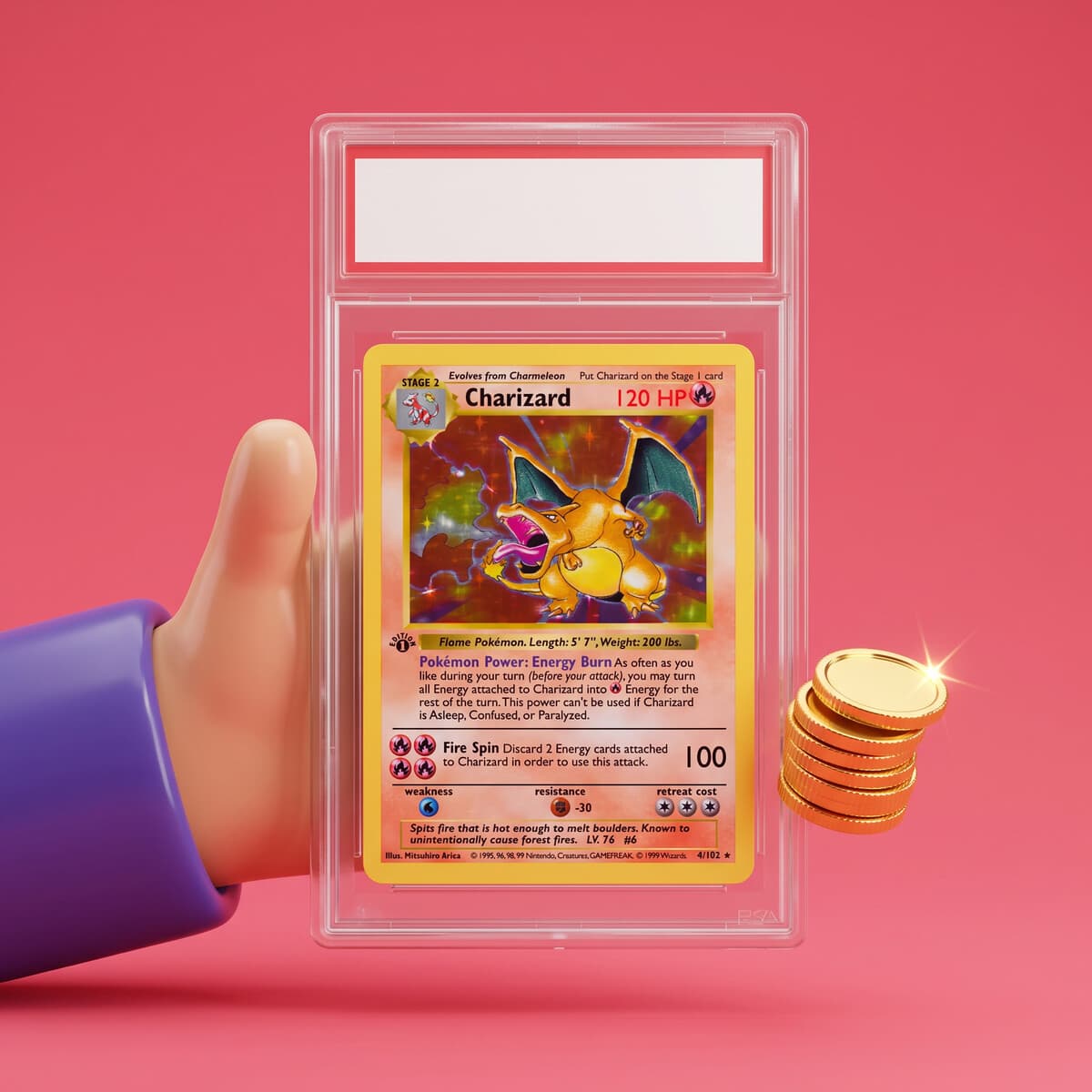
A MLKY loan is a simple deal stated plainly: you hand over a graded card as collateral, USDC lands in your wallet, and the card comes back the moment you repay. It is not a sale. It is a fixed term at a fixed rate, priced against your exact card and enforced on-chain from the first step to the last. Here is the whole lifecycle.
Get a signed quote for your exact card
Before anything touches the chain, MLKY’s oracle prices the card you actually hold, not the floor of the collection it belongs to. It resolves your card’s grading certificate, fetches the current fair market value (FMV), and returns a signed quote: the FMV in USDC, the maximum loan-to-value that card supports, and the term and rate on offer.
Quotes expire in about five minutes. That is a feature. A price this fresh cannot be gamed by waiting for the market to move. If yours lapses, you just ask for another.
Prove the card is eligible
MLKY keeps an allowlist of every card that can be used as collateral, hashed into a Merkle tree (a hash tree of eligible cards) whose root lives on-chain. You submit a small proof that your card is in the current tree, which produces a receipt the next step consumes. It is a few hundred bytes, the transaction is cheap, and it happens once per loan.
Open the loan
You submit the signed quote, the proof receipt, and the pool you want to borrow from. The program checks everything in one shot: the oracle’s signature, the allowlist root, whether the amount fits the pool’s limits and your card’s quote. If it all passes, the loan is created and a short window opens to complete the draw.
Draw the funds. This is where the card moves
Drawing is the moment the deal actually happens. Your card transfers into the protocol’s collateral vault and is frozen. You do not keep it while the loan is open. In the same breath, the pool sends you the principal minus a small origination fee, and the maturity clock starts.
That trade is the honest heart of MLKY: the card is out of your hands for the term, and nothing but repayment brings it back.
Repay in full, and the card comes home
Repayment is one transaction: principal plus the full fixed interest. There is no partial-repayment path. Anything less than the full payoff is rejected. When it lands, the card is unlocked and returned to your wallet, and the rent paid for the loan’s accounts is refunded to you.
You can repay any time after drawing, even the same day. The interest is fixed either way, so repaying early costs nothing extra and saves nothing. But it does put the card back in your hands sooner.
Reading it is one thing. Here is the whole loop as a toy. Pick a card, take the quote, draw, repay. Example numbers, real shape.
Pick a card to borrow against.
See it working, not written down.